Mostrar mensagens com a etiqueta Cantos. Mostrar todas as mensagens

sexta-feira, 30 de junho de 2006

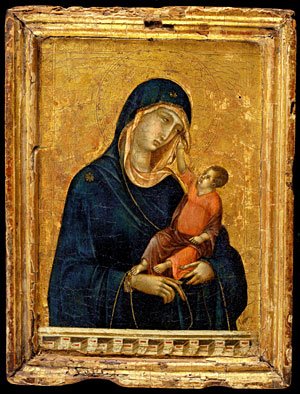
Duccio e a Arte de Siena


"Duccio came not by usura"
Ezra Pound, Cantos XLV
"Duccio não proveio da usura"

quinta-feira, 29 de junho de 2006

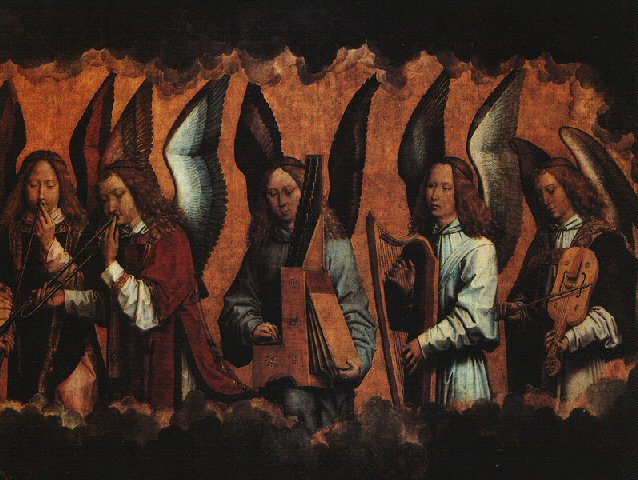
Memling e a Arte Flamenga


"[With usura]Emerald findeth no Memling"
Ezra Pound, Canto XLV, Cantos
"[Com a usura] a Esmeralda não encontra nenhum Memling"

terça-feira, 27 de junho de 2006

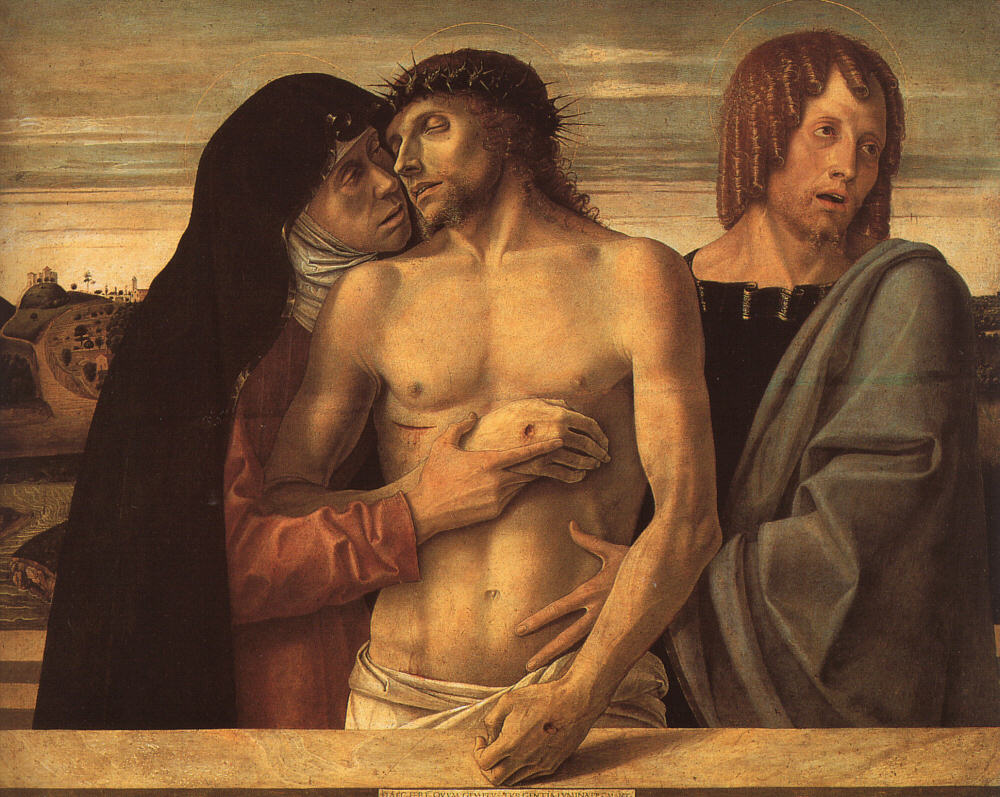
Bellini e a arte de Veneza


"Zuan Bellin's not by usura" (Ezra Pound, Cantos, XLV)
"Zuan Bellini não proveio da usura"

domingo, 21 de maio de 2006

Bertran de Born


"Pennons and standards y cavals armatz" ("Flâmulas e estandartes y cavals armatz")
Ezra Pound, Canto VII
Verso inspirado no trovador francês, Bertran de Born (1140-1215). Apesar das suas qualidades poéticas, os seus poemas eram sobretudo exortações à guerra. Este espírito belicoso e intriguista encorajou directamente os filhos de Eleonor contra o seu próprio pai, Henrique (Henry II que, na altura, controlava metade ocidental da França, desde a Normandia à Aquitânia). Dante, no Inferno (XXVIII, v.118), mostra-o com a cabeça cortada usando-a como se esta última fosse uma candeia que o iluminasse no oitavo dos nove círculos do Inferno.

sábado, 11 de março de 2006

E então fomos para o navio... e assim:

CANTO I.
"And then went down to the ship,
Set keel to breakers, forth on the godly sea, and
We set up mast and sail on that swart ship,
Bore sheep aboard her, and our bodies also
Heavy with weeping, and winds from sternward
Bore us onward with bellying canvas,
Crice's this craft, the trim-coifed goddess.
Then sat we amidships, wind jamming the tiller,
Thus with stretched sail, we went over sea till day's end.
Sun to his slumber, shadows o'er all the ocean,
Came we then to the bounds of deepest water,
To the Kimmerian lands, and peopled cities
Covered with close-webbed mist, unpierced ever
With glitter of sun-rays
Nor with stars stretched, nor looking back from heaven
Swartest night stretched over wreteched men there.
The ocean flowing backward, came we then to the place
Aforesaid by Circe.
Here did they rites, Perimedes and Eurylochus,
And drawing sword from my hip
I dug the ell-square pitkin;
Poured we libations unto each the dead,
First mead and then sweet wine, water mixed with white flour
Then prayed I many a prayer to the sickly death's-heads;
As set in Ithaca, sterile bulls of the best
For sacrifice, heaping the pyre with goods,
A sheep to Tiresias only, black and a bell-sheep.
Dark blood flowed in the fosse,
Souls out of Erebus, cadaverous dead, of brides
Of youths and of the old who had borne much;
Souls stained with recent tears, girls tender,
Men many, mauled with bronze lance heads,
Battle spoil, bearing yet dreory arms,
These many crowded about me; with shouting,
Pallor upon me, cried to my men for more beasts;
Slaughtered the herds, sheep slain of bronze;
Poured ointment, cried to the gods,
To Pluto the strong, and praised Proserpine;
Unsheathed the narrow sword,
I sat to keep off the impetuous impotent dead,
Till I should hear Tiresias.
But first Elpenor came, our friend Elpenor,
Unburied, cast on the wide earth,
Limbs that we left in the house of Circe,
Unwept, unwrapped in the sepulchre, since toils urged other.
Pitiful spirit. And I cried in hurried speech:
"Elpenor, how art thou come to this dark coast?
"Cam'st thou afoot, outstripping seamen?"
And he in heavy speech:
"Ill fate and abundant wine. I slept in Crice's ingle.
"Going down the long ladder unguarded,
"I fell against the buttress,
"Shattered the nape-nerve, the soul sought Avernus.
"But thou, O King, I bid remember me, unwept, unburied,
"Heap up mine arms, be tomb by sea-bord, and inscribed:
"A man of no fortune, and with a name to come.
"And set my oar up, that I swung mid fellows."

And Anticlea came, whom I beat off, and then Tiresias Theban,
Holding his golden wand, knew me, and spoke first:
"A second time? why? man of ill star,
"Facing the sunless dead and this joyless region?
"Stand from the fosse, leave me my bloody bever
"For soothsay."
And I stepped back,
And he strong with the blood, said then: "Odysseus
"Shalt return through spiteful Neptune, over dark seas,
"Lose all companions." Then Anticlea came.
Lie quiet Divus. I mean, that is Andreas Divus,
In officina Wecheli, 1538, out of Homer.
And he sailed, by Sirens and thence outwards and away
And unto Crice.
Venerandam,
In the Cretan's phrase, with the golden crown, Aphrodite,
Cypri munimenta sortita est, mirthful, oricalchi, with golden
Girdle and breat bands, thou with dark eyelids
Bearing the golden bough of Argicidia. So that:"
Ezra Pound
sábado, 4 de março de 2006

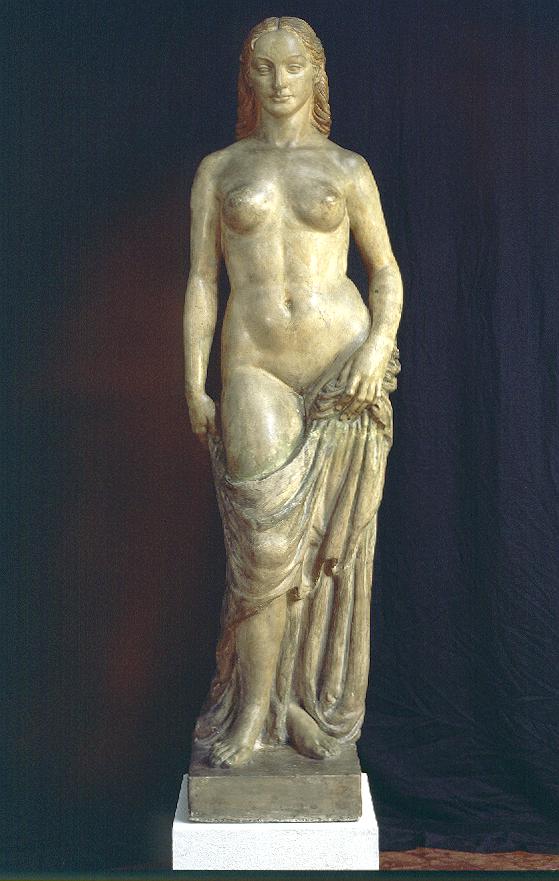
Afrodite So That:


Escultura do húngaro Beck Ö, datada de 1914. Misto de Art Nouveau e classicismo, esta escultura permite-nos invocar o hino homérico a Afrodite e as linhas finais do primeiro Canto de Pound:

"Muse, tell me the things done by golden Aphrodite,
the one from Cyprus, who arouses sweet desire for gods
and who subdues the races of mortal humans,
and birds as well, who fly in the sky, as well as all beasts
—all those that grow on both dry land and the sea.
They all know the things done by the one with the beautiful garlands, the one from Kythera" (Hino Homérico a Afrodite, 1-6, trad. inglesa de Gregory Nagy)

"Aphrodite,...with golden
Girdles and breast bands, thou dark eyelids
Bearing the golden bough of Argicida. So that:"
(Ezra Pound, Cantos, I)

"Afrodte.... com dourados
Cintos e faixas nos seios, tu, com pálpebras negras
Trazendo a rama de ouro do Argicida. E assim:"
(Ezra Pound, Cantos, I)

Nota: Hermes, o deus do mundo dos mortos, é habitualmente apresentado nos textos clássicos, como "o que mata Argus", o Argicida

sexta-feira, 3 de março de 2006

Amor em Ezra Pound


"What thou lovest well remains,
the rest is dross
What thou lov'st well shall not be reft from thee
What thou lov'st well is thy true heritage
Whose world, or mine or theirs
or is it of none?
First came the seen, then thus the palpable
Elysium, though it were in the halls of hell,
What though lovest well is thy true heritage
What though lov'st well shall not be reft from thee"
(Ezra Pound, Cantos, LXXXI)

"Aquilo que amas bem permanece,
o resto é desperdício
O que amas bem não será arrebatado de ti
O que amas bem é a tua verdadeira herança
De quem é o mundo, meu ou deles
ou de nenhum?
Primeiro veio o visível, depois o palpável
Elísio, mesmo que seja nos salões do inferno,
O que amas bem é a tua verdadeira herança
O que amas bem não será arrebatado de ti"
(Ezra Pound, Cantos, LXXXI)

quinta-feira, 2 de março de 2006

Usura


Escute o célebre canto dos "Cantos", o canto XLV, "Usura", lido pelo próprio Ezra Pound. Aqui.

sábado, 15 de janeiro de 2005

Confúcio

CANTO XIII

Kung walked
by the dynastic temple
and into the cedar grove,
and then out by the lower river,
And with him Khieu Tchi
and Tian the low speaking
And "we are unknown," said Kung,
"You will take up charioteering?
"Then you will become known,
"Or perhaps I should take up charioterring, or archery?
"Or the practice of public speaking?"
And Tseu-lou said, "I would put the defences in order,"
And Khieu said, "If I were lord of a province
"I would put it in better order than this is."
And Tchi said, "I would prefer a small mountain temple,
"With order in the observances,
with a suitable performance of the ritual,"
And Tian said, with his hand on the strings of his lute
The low sounds continuing
after his hand left the strings,
And the sound went up like smoke, under the leaves,
And he looked after the sound:
"The old swimming hole,
"And the boys flopping off the planks,
"Or sitting in the underbrush playing mandolins."
And Kung smiled upon all of them equally.
And Thseng-sie desired to know:
"Which had answered correctly?"
And Kung said, "They have all answered correctly,
"That is to say, each in his nature."
And Kung raised his cane against Yuan Jang,
Yuan Jang being his elder,
For Yuan Jang sat by the roadside pretending to
be receiving wisdom.
And Kung said
"You old fool, come out of it,
"Get up and do something useful."
And Kung said
"Respect a child's faculties
"From the moment it inhales the clear air,
"But a man of fifty who knows nothng
Is worthy of no respect."
And "When the prince has gathered about him
"All the savants and artists, his riches will be fully employed."
And Kung said, and wrote on the bo leaves:
If a man have not order within him
He can not spread order about him;
And if a man have not order within him
His family will not act with due order;
And if the prince have not order within him
He can not put order in his dominions.
And Kung gave the words "order"
and "brotherly deference"
And said nothing of the "life after death."
And he said
"Anyone can run to excesses,
"It is easy to shoot past the mark,
"It is hard to stand firm in the middle."

And they said: If a man commit murder
Should his father protect him, and hide him?
And Kung said:
He should hide him.

And Kung gave his daughter to Kong-Tchang
Although Kong-Tchang was in prison.
And he gave his niece to Nan-Young
although Nan-Young was out of office.
And Kung said "Wan ruled with moderation,
"In his day the State was well kept,
"And even I can remember
"A day when the historians left blanks in their writings,
"I mean, for things they didn't know,
"But that time seems to be passing.
A day when the historians left blanks in their writings,
But that time seems to be passing."
And Kung said, "Without character you will
"be unable to play on that instrument
"Or to execute the music fit for the Odes.
"The blossoms of the apricot
"blow from the east to the west,
"And I have tried to keep them from falling."

Ezra Pound

quinta-feira, 13 de janeiro de 2005

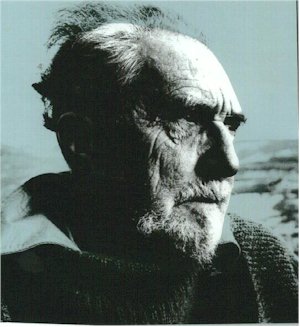
Ezra Pound


"And then went down to the ship,
Set keel to breakers, forth on the godly sea, and
We set up mast and sail on that swart ship,
Bore sheep aboard her, and our bodies also
Heavy with weeping, and winds from sternward
Bore us onward with bellying canvas,
Crice's this craft, the trim-coifed goddess." Canto I Posted by Hello

Make it New!

"Então uma Imperatriz fugiu com Chao Kang na sua barriga.
Fou-hi por meio da madeira;
Ching-nong, do fogo; Hoang Ti regido pela terra,
Chan pelo metal.
Tchuen era senhor, como é a água.
CHUN governa
YU cultiva,
A superfície não é suficiente,
de Chang Ti nada é escondido.
Durante anos nada de águas vindas, nenhuma chuva caiu
para o Imperador Tching Tang
grão escasso, preços subindo
de modo que em 1760 Tching Tang abriu a mina de cobre (ante Christum)
fez discos com orifícios quadrados no meio
e deu estes ao povo
com os quais pudessem comprar grão
onde houvesse grão
Os silos ficaram suavizados
7 anos de esterilidade
der im Baluba das Gewitter gemacht hat
Tching orou na montanha
escreveu MAKE IT NEW
em sua banheira
Dia-a-dia faço-o novo
corte a vegatação rasteira
empilhe os cepos
mantenho-os crescendo."

Ezra Pound, Cantos [The Cantos], Canto LII (trad. José Lino Grünewald)